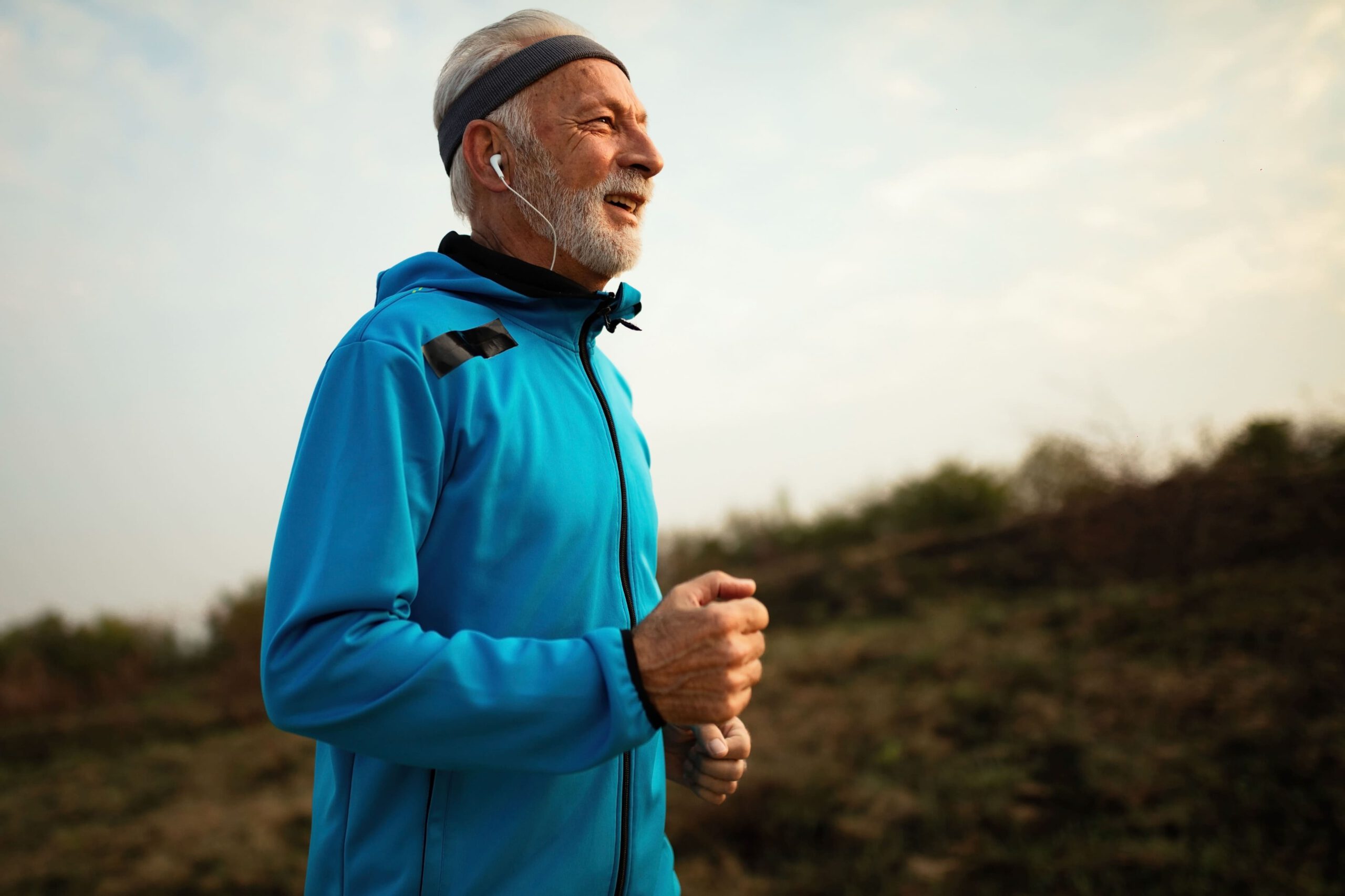
Running is not only beneficial for younger people; it can also make a significant contribution to the health and well-being of older adults. Here on the Costa del Sol, many older people enjoy staying active. However, even those who continue to train regularly often notice a decline in fitness, respiratory capacity and muscle strength compared with their younger years.
Declining endurance
As we age, endurance tends to decline due to changes in the heart’s pumping function and in the peripheral circulation (the blood circulation further away from the heart). One of these changes is a reduction in maximum heart rate. This contributes to a decrease in maximal oxygen uptake (VO₂ max), which is one of the most important determinants of aerobic endurance.
Regular exercise can help counteract this decline by maintaining cardiac function, a healthy body weight, blood supply to the muscles and muscular metabolism.
Changes in breathing
As we get older, lung capacity and lung elasticity gradually decrease. As a result, the volume of air we can breathe in and out per minute becomes smaller. In addition, the respiratory muscles become less powerful, and some areas of the lungs may receive less effective blood flow.
However, in generally healthy individuals, the age-related decline in lung function usually has only a limited impact on the reduction in endurance.
Changes in muscle strength and neuromuscular control
Muscle strength, particularly leg strength, is an important factor for runners. Between the ages of 25 and 65, muscle strength can decline considerably. This loss is largely associated with a reduction in muscle mass and can be counteracted through regular strength training.
After the age of 60, muscle strength may decline further, partly due to changes in hormones such as testosterone and growth hormone. Muscle fibre composition also changes, with a relative shift towards slower-twitch fibres, and muscles tend to become stiffer.
The neuromuscular system also changes, making coordination of muscle movements more challenging. These declines tend to be more pronounced in the legs than in the arms.
For older runners, strength training should therefore be an important part of their exercise programme. Gym-based strength training and hill training can be particularly beneficial. However, explosive exercises should be introduced cautiously, as the risk of muscle injuries may be higher with age, especially when training loads are not adapted appropriately.
Changes in joints and tendons
As we age, joints tend to become less flexible, and the quality of joint cartilage may deteriorate, increasing the likelihood of osteoarthritis-related symptoms. The reduction in joint mobility varies between individuals and depends on the joint involved.
There is no strong evidence that running itself inevitably leads to an excessive increase in osteoarthritis. However, pre-existing joint abnormalities, for example following an accident, knee surgery or a significant joint alignment problem, may increase the risk of developing osteoarthritis.
Tendons also tend to become stiffer with age, while their tensile strength may decrease. This can contribute to an increased risk of Achilles tendon problems in runners over the age of 50.
As we get older, it is advisable to pay more attention to complementary forms of exercise that improve flexibility, stability and coordination. Activities such as Tai Chi, Pilates, yoga and Body Balance can be valuable additions to a running programme.
Investing in your health for the future
If you invest in building strong bones at a younger age through regular weight-bearing exercise, such as running, you may reduce your risk of fractures later in life. In other words, the physical investments you make when you are younger can pay dividends as you grow older!
How can sports medicine help?
At Compass Clinic, I see many older adults experiencing overuse injuries and other musculoskeletal complaints. Exercise-related symptoms involving the heart and respiratory system are also relatively common and should be assessed appropriately.
As a sports physician, I can help by taking a comprehensive medical history and performing a thorough physical examination. Where necessary, additional investigations may be arranged, including blood tests, imaging such as X-rays or ultrasound, an electrocardiogram (ECG), or even an exercise test.
This enables me to assess symptoms carefully and provide targeted, individualised advice to help you remain active, minimise the risk of injury and enjoy the beautiful Costa del Sol in good health for as long as possible.